
Five layers, designed as one.

Most technology problems sit between layers: a platform sized without the network in mind, monitoring that can’t see the radio link, an integration nobody owns. We work across all five, starting at the wire.

01 Networks & ICT infrastructure

Networks that carry the services built on them.

We design and build access, backhaul and core networks for multi-site operators, and we monitor them once they’re live.

Delivered Fault confirmation, hourly reporting and a configuration standard for a network operator. A live view of a multi-site network for a systems integrator’s control room.

PoP High sites Clients
  • Design and build: points of presence, high sites, last-mile radio and fibre
  • Routing and overlay: OSPF, BGP, BFD, WireGuard management meshes, Layer 2 service tunnels
  • Configuration standards: audits against a template the operator approves, rolled out in batches
  • Monitoring: LibreNMS estates, maps generated from topology, alerting that confirms before it alarms
  • Fault analysis: every router on a path checked and written up per event
MikroTik RouterOSUbiquiti UISPOSPFBGPWireGuardFibre60 GHzLicensed backhaul

Monitoring we build ourselves

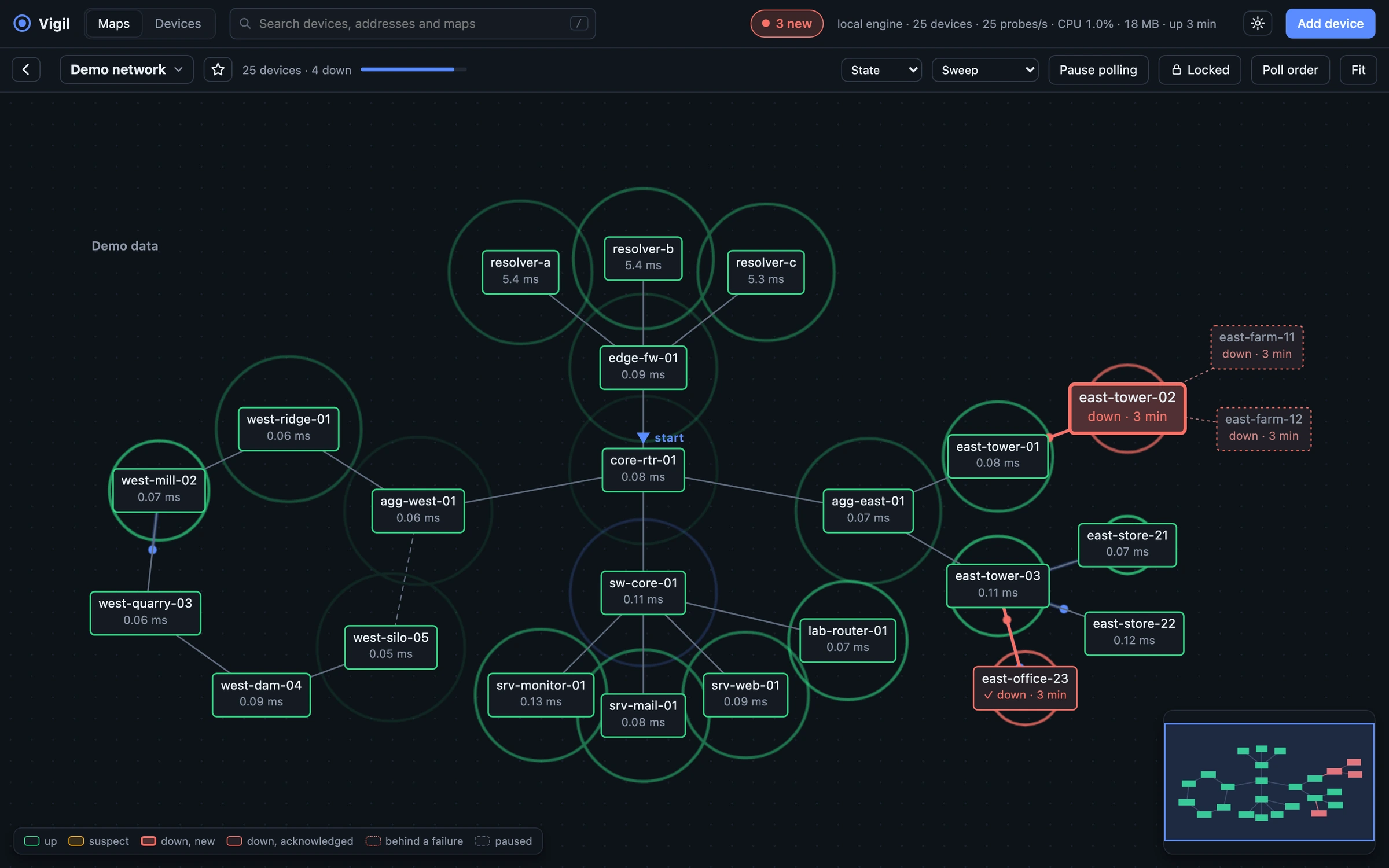
Besides running LibreNMS estates, we write our own monitor. This is Vigil on a demo network: one fault marked as the cause, and the two devices behind it drawn dashed, so nobody is sent to three places.
See Vigil

Vigil map view, dark theme: 25 devices as boxes joined by links, most green, one red fault with two dashed devices behind it.
Vigil 0.3.0 on demo data

02 Cloud

Platforms sized and run for the long term.

Hosting, virtualisation and mail that stay patched, backed up and delivered, in South Africa.

Delivered A self-service mail portal and hybrid Microsoft 365 mail for a professional-services firm: 12 mail domains and 63 mailboxes. Two business websites rebuilt as static pages with nothing to patch.

Proxmox host Virtual machine Virtual machine Virtual machine Our mail server Microsoft 365 Hybrid SPF, DKIM, DMARC
  • Hosting on our own platform in South Africa, with backups, hardening and certificates managed
  • Virtualisation on Proxmox
  • Microsoft 365 mail and hybrid mail routing, with SPF, DKIM and DMARC per domain
  • Migrations planned mailbox by mailbox, with a status report per domain
DebianProxmoxISPConfignginxPostfixMicrosoft 365Cloudflare

03 APIs

Systems that talk to each other.

Data moves between network equipment, monitoring and business systems without anyone retyping it.

Delivered Every device on a multi-site network placed on its site from the switch port that learned its address. A mail portal that drives the hosting panel and Microsoft 365 through their APIs.

Routers Monitoring Business system API Dashboard Report
  • Integrations with network equipment and management platforms: RouterOS, UISP, LibreNMS, SNMP, NetFlow and IPFIX
  • Small, documented APIs in Python and Node in front of the systems clients already own
  • Alert dispatch to the channels teams actually read
PythonFastAPIFlaskNodeExpressPostgreSQLMariaDB

04 DevOps

Every release has a way back.

Systems we build deploy the same way every time, and the people who inherit them can see why they were built that way.

Delivered A control-room dashboard keeps its three previous releases on the server. This website deploys with a backup of the live site and a test of every page.

  • Deploy scripts that lint, back up the live system, release, smoke-test every page and roll back on request
  • Continuous integration on the repositories we hand over
  • Scheduled collectors and reports with health checks of their own
  • A README, a runbook and the reasons behind decisions in every repository
gitGitHub Actionssystemdbashrsync
Checked Source and configuration Backed up Known working copy Released New version in place Smoke-tested Every page exercised If verification fails Restore the known working release
The release method. The previous working copy stays recoverable.

05 AI

Models that draft. People who decide.

Language and speech models where they save an engineer time, on local models where client data must not leave the building.

Delivered An hourly operations report, running since June 2026. A voice agent for dispatch, tested on live calls and not yet in service.

Network data ModelDrafts EngineerDecides Report Call
  • Operational reporting: a model drafts the summary; the data and the decision stay with the engineer
  • Voice, in testing: an agent that phones the on-call technician, describes the fault and confirms whether they can attend
  • Local models where client data must stay in-house
  • No system we build depends on a model being right
Claude APILocal modelsSpeech-to-textText-to-speech

How we work

  1. Survey

    We read the estate as it is, without changing anything, and write down what we find.

  2. Design

    A target architecture across the layers, and a roadmap with the order of work and what each step depends on.

  3. Build

    Changes go in as reviewed files, each with a way back. A change window never blurs into an outage.

  4. Hand over or run

    Repositories, runbooks and monitoring ship with the work. You can run it without us; most clients choose not to.

Numbers you can check.

A fault needs a second witness, says how sure it is, and links to the raw data.

Models draft, people decide.

No system we build depends on a language model being right.

Ways to engage

Second opinion

A short, fixed look at your network, platform or system, written up: where the numbers disagree, what is exposed, what would fail first. Often it’s all that’s needed.

Project

A defined piece of work, designed and delivered: a network build, a migration, a dashboard, an integration. Scope and timeline agreed up front; repository and README at the end.

Retainer

We run what we or others built: monitoring, maintenance, incident response, an agreed response time and a number to call.

Not sure which layer the problem is in?

That’s usually the question. Describe what you’re seeing and we’ll tell you where we’d look first.

Start a conversation